Vegetables, grains and dairy at a Middle Eastern table
See how vegetable texture, grain choice and dairy can change a shared meal, with specific dishes to explore at Yalla.
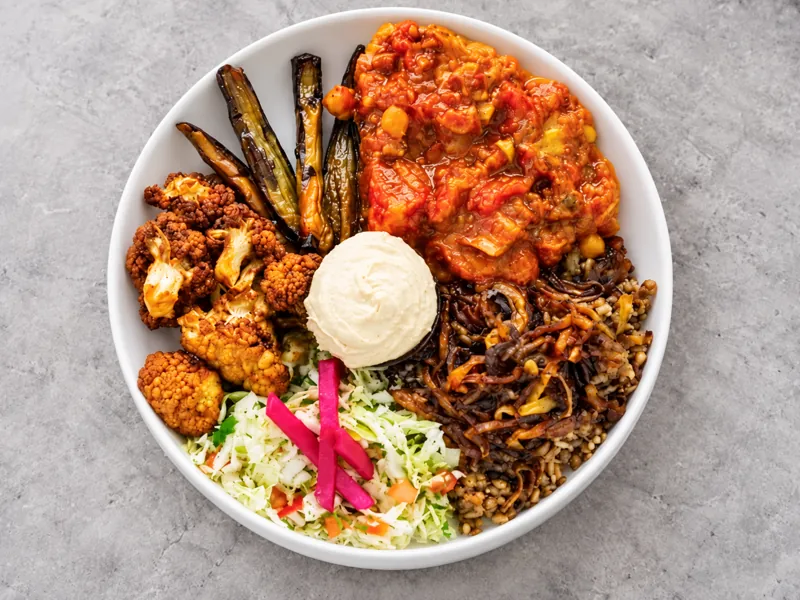
Cauliflower can anchor a vegetable dish
Cauliflower has enough structure to remain recognizable in a cooked vegetable selection. Its surface can carry seasoning while the center provides a different texture. In a mixed vegetable order, the balance between cauliflower, eggplant and zucchini is worth checking rather than assuming every portion contains identical amounts.
If one vegetable is your favorite, ask about the current mix. Availability can affect the balance in a finished selection.
Zucchini works differently in small and large pieces
The size of a zucchini piece changes how you experience its skin, center and seasoning. Smaller pieces distribute easily through a mixed dish; larger pieces let the vegetable remain more distinct. The cut is therefore part of the recipe, not just a cosmetic choice before cooking.
At home, keep the size consistent within one batch if you want pieces that finish at a similar point.
Tomatoes add moisture as well as flavor
A fresh tomato can change the juiciness of a wrap or salad, not just its color. That makes it a practical ingredient to consider when choosing garnishes. Finely chopped tomato spreads through a mixture, while a larger piece gives you a clearer tomato bite.
When planning food to take away, read the garnish description and choose the combination you actually want rather than adding every vegetable by default.
Onion in a mixture is not the same as onion on top
Onion can be part of a cooked mixture or a fresh garnish. Those roles give different textures and strengths of flavor. Removing a visible onion topping may not remove onion from the filling or sauce underneath, which is why a complete ingredient conversation matters.
Tell the team whether your question is about a garnish, a preference or avoiding onion throughout the whole preparation.
Cucumber is a texture ingredient
Cucumber often contributes a cool, crisp bite that is easiest to notice beside a softer food. Chopping it finely distributes that texture through a dip; using larger pieces makes it a distinct salad component. The same vegetable can therefore change how a meal feels without becoming its strongest flavor.
Compare a cucumber-based dip with a fresh cucumber side. Choose the format that adds the contrast your meal needs.
Cabbage keeps a different kind of crunch
Cabbage can give a salad a firmer bite than leafy greens. Cutting it finely makes the strands easier to distribute, while the dressing shapes the final balance of tang and seasoning. It is worth treating cabbage salad as its own accompaniment, not simply as a substitute name for any garden salad.
Read which salads are listed with a platter. Two different salads can contribute different textures rather than repeat the same side.
Bulgur is not the same as a bowl of rice
Bulgur and rice are different grain ingredients with different textures and preparation roles. Bulgur can appear in an herb-forward salad without becoming the main volume of the dish. A small amount mixed into a salad should not be mistaken for a separate rice side.
Check grain ingredients when wheat matters to your diet. A dish described mainly through herbs or vegetables may still include bulgur.
Yogurt can be a base rather than a topping
Yogurt can form the body of a dip, with vegetables and seasonings worked into it. That gives it a different role from a spoonful added on top of a finished dish. The final texture and ingredients depend on the particular preparation, so appearances alone are not a reliable guide.
Ask about dairy in sauces and dips as well as in obviously cheesy dishes when discussing dietary restrictions.
Cheese blends create a balance of tastes
A cheese blend combines more than one flavor and texture, which can change how a bakery item or filled appetizer eats. The name of a four-cheese blend does not establish the identity of every cheese in it. A smooth filling and a baked topping also behave differently at the table.
If the specific cheese matters to you, ask about the current blend rather than making a guess from its color.
The Middle Eastern table has room for vegetables
A food selection centered only on meat leaves out many of the menu’s textures and ingredients. Dips, salads, legumes, stuffed vegetables and bakery fillings offer other ways to build a meal. Exploring them adds variety without requiring a complicated order.
Pick one vegetable or legume preparation as a main choice rather than treating every such dish as an extra.