Shawarma, kafta and skewers: what is different?
Compare sliced shawarma, seasoned ground-meat kafta and whole-piece skewers before choosing a wrap or platter.
Three-day meat marinades: patience in the Yalla kitchen
A marinade is a preparation stage, not a claim that meat has already been cooked. The final cooking method still matters, whether the main is sliced shawarma or a grilled skewer.
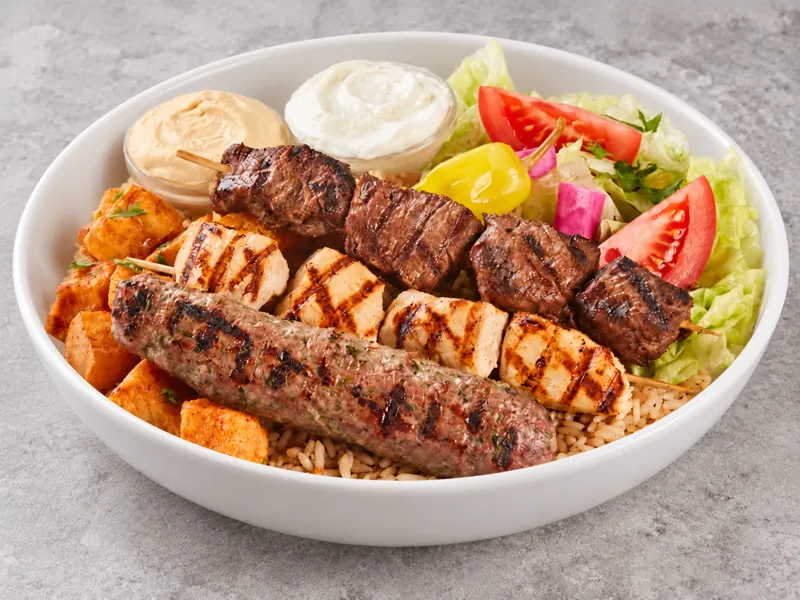
When choosing your meal, compare the complete preparation: ground kafta, whole pieces on skewers and sliced shawarma create different textures. The marinade alone does not describe the finished dish.
A restaurant’s controlled preparation process is not a home food-storage instruction. Follow appropriate food-safety guidance when handling raw meat in your own kitchen.
Skewer spacing is a practical choice
Putting pieces onto a skewer is a preparation step with a practical purpose. The size and arrangement determine how the pieces sit together and how they can be handled. A crowded or irregular home skewer may be harder to work with than a neatly planned one.
Keep piece sizes reasonably consistent in a home batch. Follow a reliable recipe for the actual cooking and food-safety requirements.
Ground and whole-piece meat create different bites
Ground meat mixed with herbs has a different structure from a whole piece on a skewer. Neither format is inherently the better one. The useful comparison is whether you prefer a more integrated mixture or the texture of distinct pieces, and how the sides fit that choice.
Compare the menu description of kafta with a whole-piece skewer before deciding that two grilled dishes are interchangeable.
Roasted flavor and burned food are not the same goal
Browning can be part of the flavor and appearance a cook is aiming for. Burning is not a shortcut to a more interesting dish. The distinction is about controlling the process and tasting the result, rather than simply making the food as dark as possible.
For a home recipe, judge the finish using the recipe’s instructions instead of color alone.
Kafta is a mixture with its own texture
Kafta uses a ground-meat preparation with ingredients mixed through it. Yalla’s description includes parsley, onion, tomato and spices. That structure differs from a skewer assembled from whole pieces, even when both dishes are grilled.
Compare kafta with a whole-piece skewer if you want to explore a different meat texture rather than merely a different name.
A filet mignon skewer is a whole-piece main
A whole-piece beef skewer lets the meat remain a distinct part of each bite. The listed cooking preference and accompanying sides belong to the order as well. It is useful to read those details instead of assuming every beef dish follows the same preparation.
Tell the team about an available cooking preference before the order is prepared, and check the current serving description.
Chicken skewers and chicken shawarma are different meals
The protein name does not describe the whole dish. Chicken on skewers is served in whole pieces, while shawarma has a sliced preparation and its own listed garnishes. The serving format and sauces can make the two choices feel very different.
Use the more details pages to compare preparation and included sides before choosing between the two.
Mixed shawarma means two mains in one serving
A mixed shawarma option combines chicken and beef rather than requiring you to choose one. It can be useful when you enjoy both, but its sauce and garnish description still matters. A mixed wrap and a mixed platter are not identical servings.
Read the specific mixed item’s inclusions instead of combining the descriptions of two separate orders in your head.