Wrap, bowl or family platter: choosing a meal
Plan for the way you want to eat: a wrap in bread, separate sides on a platter or a larger order to share.
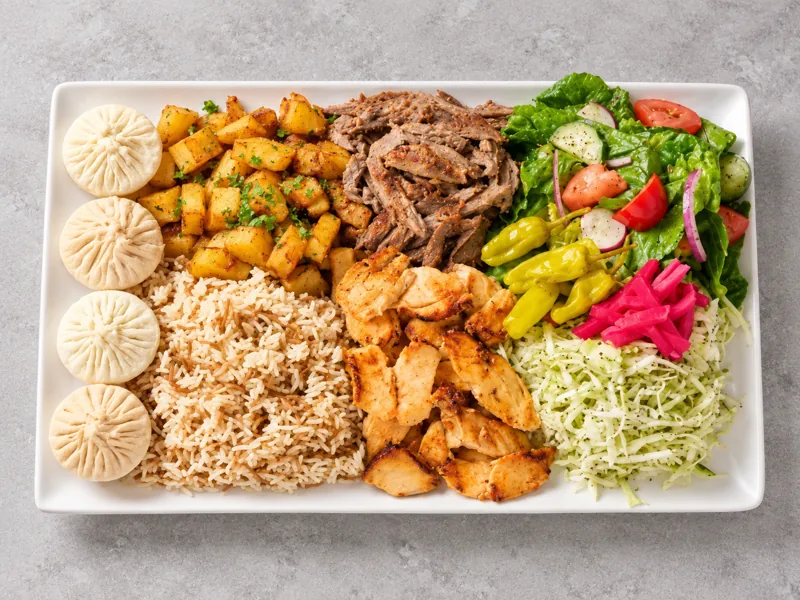
A wrap or a bowl? Choose the serving that fits your day
A wrap brings filling and garnishes into each bite. A bowl lets you taste the main, sauces and sides separately. Neither format tells you the calorie content without recipe and portion information.
For a meal on the move, a wrap may be convenient. When you want to sit down and explore several accompaniments, read the bowl description and choose the combination that appeals to you.
Compare included sides before ordering extras. A bowl and a sandwich may contain different garnishes even when they share a main ingredient.
Assembly order matters in a wrap
Putting the components into bread is part of preparing the meal, not just packaging it. Where the filling, sauce and vegetables sit affects how the bite holds together. A good combination should be practical to eat as well as appealing to photograph.
At home, keep a first wrap simple enough to close comfortably before adding more fillings.
A larger portion is not a different recipe
Scaling the quantity and changing the preparation are separate decisions. A family-sized dip may share a recipe with an individual version while changing how it is served. A larger platter, however, can have its own specified number of mains and sides.
Read both the ingredient description and the portion information rather than assuming that a larger name means every component is multiplied equally.
The plate should leave room to combine the food
A serving can contain separate elements without forcing every bite to be a mixture of all of them. Leaving a little room gives a guest the choice to taste a main alone or with a sauce. Thoughtful plating makes that choice easier.
When serving at home, avoid filling every available space before checking that guests can comfortably use their utensils.
A shrimp platter has its own set of accompaniments
The shrimp serving should be read independently from meat platters. Yalla lists grilled jumbo shrimp with cabbage and garden salads, garlic sauce and pita. The description provides a clearer guide than assuming every platter includes rice and potatoes.
Check the current seafood preparation and ingredients before ordering for someone with a dietary restriction.
Whole chicken needs a different portion conversation
A whole grilled chicken and a skewer platter are not interchangeable serving units. The number of pieces and the way guests will portion them matter. A family version also needs its own review of included sides and cooking time.
Ask about the serving that suits your gathering rather than translating a skewer count into a whole-chicken order.
A small dinner for two can be deliberately varied
A meal for two does not need many dishes to offer variety. One main and one contrasting accompaniment can be enough to make the table interesting. Sharing should still account for the written serving quantity rather than assume every item divides neatly.
Compare the portions before choosing a second main, particularly if the first already includes several sides.
Plan a weeknight meal around one finished component
A practical weeknight dinner can start with a prepared main or dip and use simple home accompaniments. That approach reduces the number of separate tasks without pretending the entire meal was prepared the same way. Clear serving choices keep the result coherent.
Decide which component you will buy and which parts you will prepare before starting the evening’s cooking.
A tasting meal is different from an everyday dinner
A tasting meal is organized around exploring differences. An everyday dinner may be organized around familiarity and convenience. The two can use the same menu but should not be judged by the same expectations.
For an exploration meal, choose smaller, distinct experiences and leave room to notice them instead of ordering only the largest portions.